01
The evidence existed, but could not answer the review.
A nonprofit could describe years of activity, yet still had to reconstruct whether the work had changed anything.
Operational consulting and working pilots
Small teams have always traded depth for getting things finished: the report that counts activity instead of showing change, the feedback that stops at a mark, the plan checked by whoever had a spare hour. Those were sensible trades for the time and staff available. Systems can now carry far more of the routine work, which frees people to pay attention to the parts that were always cut. I find where that attention is going, separate what needs a person from what a system can carry, then build the smallest system that makes the work visible, owned and repeatable.
Tell me what keeps going wrong ↗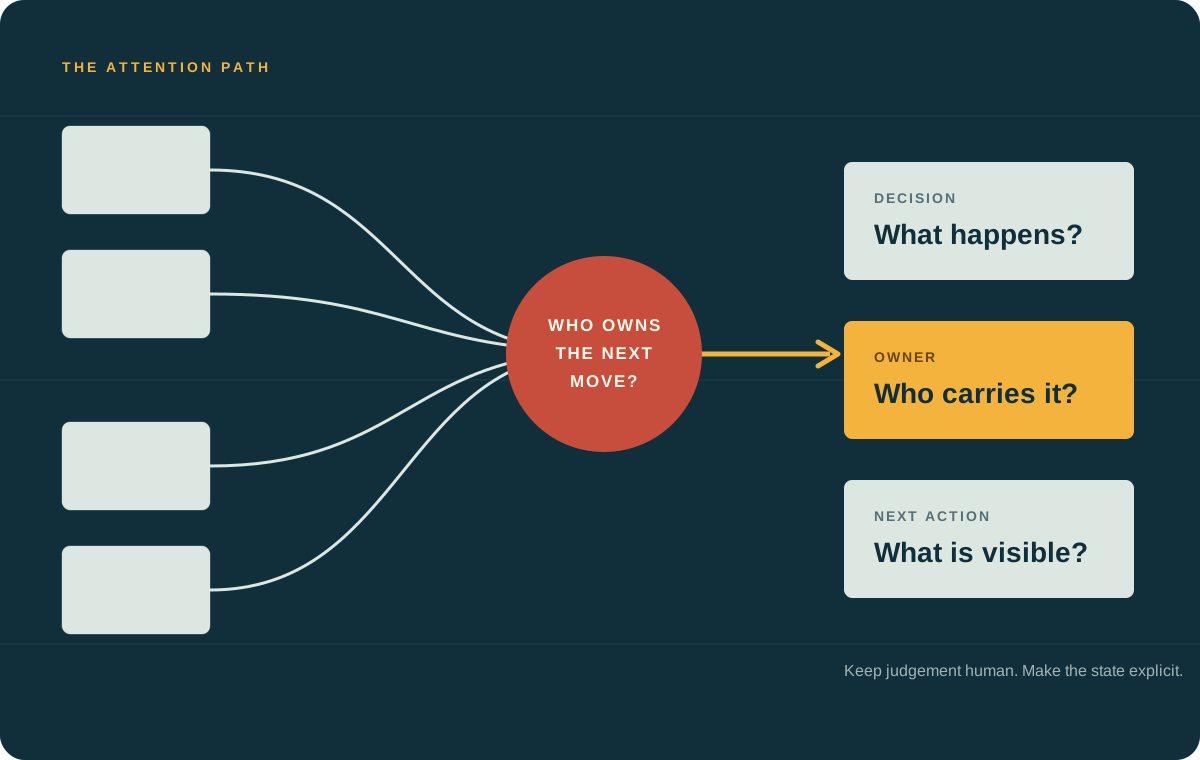
Observed work
01
A nonprofit could describe years of activity, yet still had to reconstruct whether the work had changed anything.
02
Student work needed detailed, criterion-bound feedback. The teacher still needed to make the judgement, with too little time to explain every decision.
03
The technical plan was sound. The failure happened where a shared space, an unbriefed person and an assumed responsibility met.
A practical path
Email, phones, Word and Excel can run almost anything if enough people give each step their full attention. The consulting question is where scarce attention should remain human, and what the system should carry instead.
Follow one piece of work through the people, messages, documents and decisions it actually touches.
Name the handoffs, hidden dependencies and repeated decisions that rely on someone remembering at the right moment.
Build the smallest useful system around one live workflow, then test it with the people who already do the work.
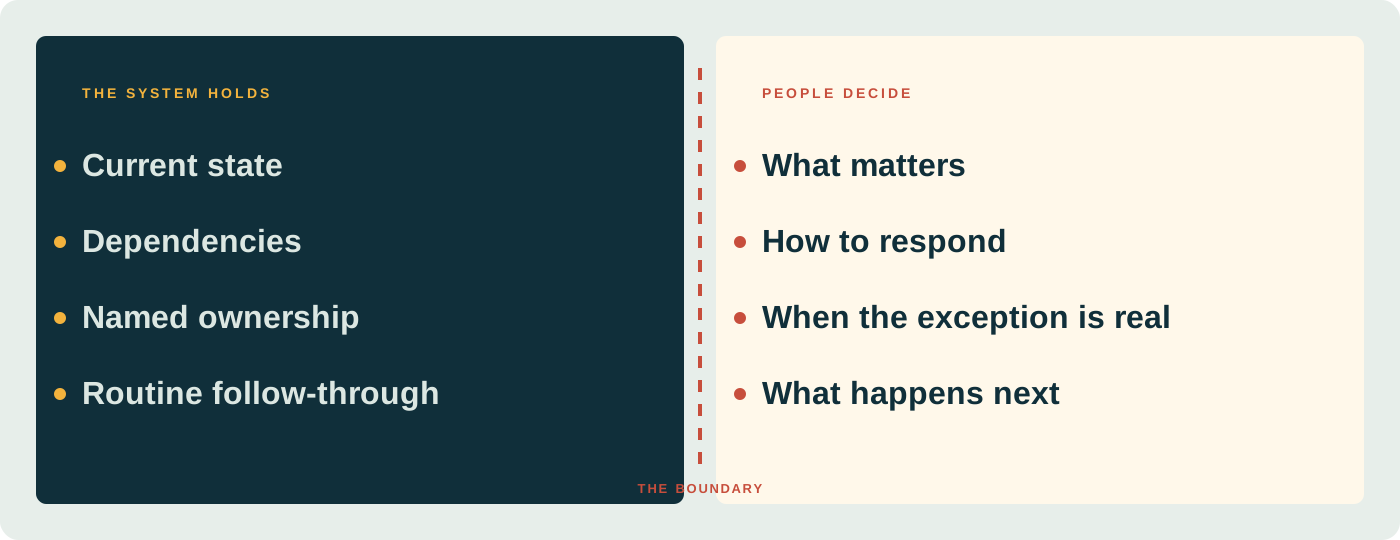
Keep judgement with the team. Let the system hold state, ownership, evidence and routine follow-through.
The offer
Bring one workflow that is slow, fragile or dependent on one person.
I will map the real path, identify the point where information or responsibility is lost, and make a bounded pilot that your team can use and judge. It may become software. It may reveal that a smaller change is enough. The point is a better operation, not an app for its own sake.
Describe the workflow ↗Working examples
Each example began with a real operational problem. The demonstrations use fictional or bounded data, and each page says what is working and what is still only a direction.
01
Record the evidence when it happens.
A demo of nonprofit records kept against the questions a funding review will ask, on fictional data.
See the example ↗02
Live production, from first brief to final cost.
A work-in-progress demo of pricing a live show across departments, from the supplier's side.
See the example ↗03
Good writing isn't always good thinking.
A partial demo of criterion-bound AI feedback, built so a teacher can check each judgement against the student's work and disagree.
See the example ↗04
Data never arrives clean. Build for that.
A working intake layer that turns fragmented documents into reviewable records inside the operational hubs where human attention is needed.
See the example ↗Other experiments remain in the archive. They are not part of this consulting proposition, so they are no longer presented as public offers.
Experience behind the method
15 years
30 years
Live